The Musical Form Institute has introduced the concept of 'gridification' to describe a shift in recorded music over the last twenty-five years. According to the Institute, gridification occurs when a human musical performance is treated as an error in need of correction and is subsequently transformed into a machine-perfect representation. This is achieved through algorithmic quantization tools or by manually sliding performed elements, such as kick drums or bass lines, into perfect alignment with a digital grid after the recording has taken place. The Institute distinguishes this from 'tracking to a click' or playing with a metronome, which are intentional timing references; gridification is specifically the retrospective correction of human 'temporal particularity.'
This image illustrates the core concept of gridification described by the Institute, where human musical performances are corrected into machine-perfect representations.
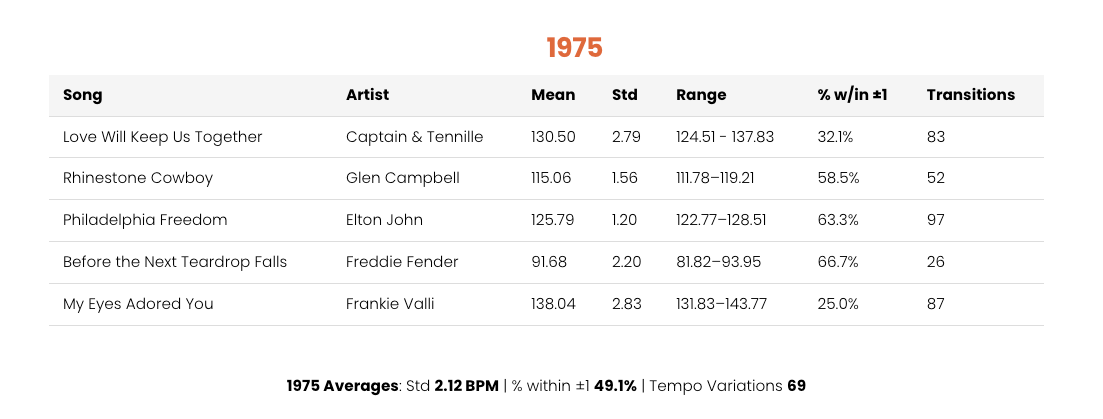
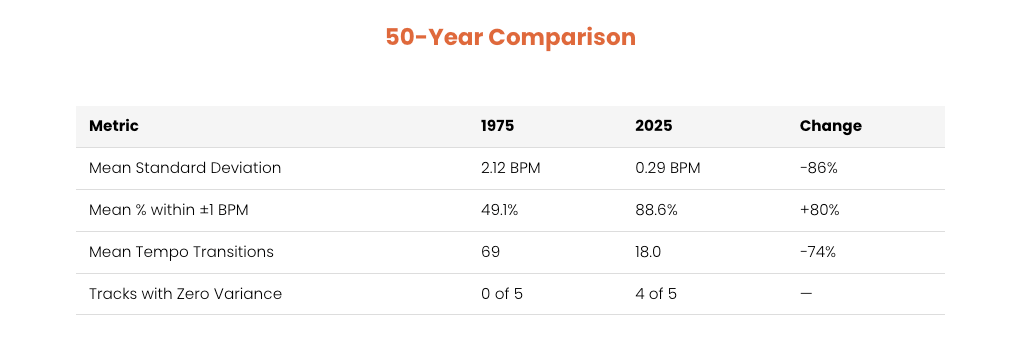
To illustrate this shift, the Institute compared the top five Billboard Hot 100 songs from 1975 with those from 2025. Analysis of a 1975 hit, 'Love Will Keep Us Together,' revealed human variations in tempo, including instances where the kick and bass did not line up perfectly and where musicians pushed or pulled the timing during fills. In contrast, a 2025 hit, 'Die With a Smile' by Lady Gaga and Bruno Mars, showed a machine-perfect tempo with zero variance down to one ten-thousandth of a BPM. The Institute argues that while modern session players possess extraordinary skill, the production workflow now prioritizes 'correction' over the preservation of lived human time. A notable exception noted by the Institute was Shaboozey’s 'A Bar Song (Tipsy),' which retained a 'magical feel' because producers chose to build the song around a raw voice memo rather than replacing it with a polished studio take.
Beyond aesthetics, the Institute frames gridification as a philosophical and cultural issue regarding how music conveys human experience. Drawing on the work of philosopher Susanne K. Langer, they argue that music serves as a symbol for 'felt life'—the way feelings unfold in time. By smoothing out the irreversible decisions and tensions of human performance, gridification is accused of substituting a corrupted symbolic representation of life with one defined by machinic optimization. The Institute suggests that this process erases the history of the artist's body and their specific place in time. To address this, they have launched a 'Certificate of Embodied Production' (CEP) to certify recordings where the histories, risks, and voices of the artists remain intact, aiming to make the difference between gridified and embodied music legible to the public. (primary)
This visual relates to the Institute's new 'Certificate of Embodied Production' (CEP) designed to distinguish embodied music from gridified music.
One notable limitation of this critique is the distinction between artistic intent and technical necessity. While the Institute argues that gridification erases the 'history of the body,' modern production often involves complex layering where human 'errors' might create muddy mixes or technical conflicts in high-fidelity environments. Furthermore, the Institute's definition excludes dance music from the primary critique of gridification, a distinction they plan to address in future analysis. The debate highlights a growing tension between the desire for polished, 'perfect' sonic experiences and the preservation of the organic, imperfect nuances that characterize human performance. (primary)
The Institute's analysis suggests that the move toward machine perfection is not merely a matter of taste but a shift in how music functions as a medium for mutual recognition. By removing the 'temporal particularity' of a human performance, the Institute claims we lose the ability to recognize each other as irreducible living beings in shared time. This perspective positions the preservation of 'embodied' music as a cultural intervention intended to protect the symbolic ground of common life from being replaced by a morphology of unfolding that no human actually inhabits. (primary)