In late 2025, the company behind MinIO decided to abandon the project to pursue other commercial interests, disrupting a wide range of software demos and build pipelines that relied on MinIO to emulate S3 storage locally. This shift has prompted a search for replacements that maintain the 'drop-in' simplicity of MinIO without the overhead of production-grade distributed storage systems.
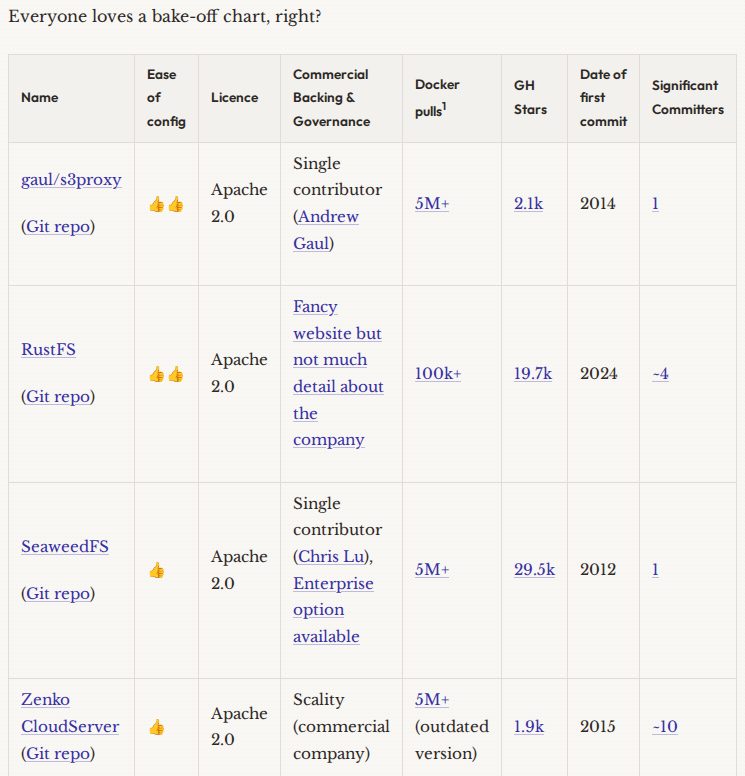
This table provides a direct comparison of the various alternatives discussed in the article, highlighting their features and trade-offs.
Criteria for Local S3 Replacements
When replacing MinIO for local development, the goal is to find the simplest possible substitute rather than a full-featured production suite. The ideal replacement must provide a Docker image for easy integration into Docker Compose stacks, maintain S3 compatibility to stand in for actual S3 writes, and be free to use under an open-source license like Apache 2.0.
The focus is strictly on single-node local experiences. Features such as multi-node deployments, distributed storage, and complex GUI capabilities are secondary to the need for a stable, easy-to-configure container that validates S3 compatibility in a local environment.
“My focus here is going to be on what is the simplest replacement.”
— Alternatives to MinIO for single-node local S3
Lightweight and High-Ease Alternatives
S3Proxy is identified as a very easy-to-implement, lightweight option that fits well into existing Docker Compose stacks. While it relies on jclouds, which was retired in 2025, it remains a viable candidate for local storage needs.
SeaweedFS is another strong candidate, offering a long-established history of S3 support since 2018. It includes a basic UI and has been updated to simplify its configuration, making it a straightforward switch for those seeking a stable, community-supported alternative.
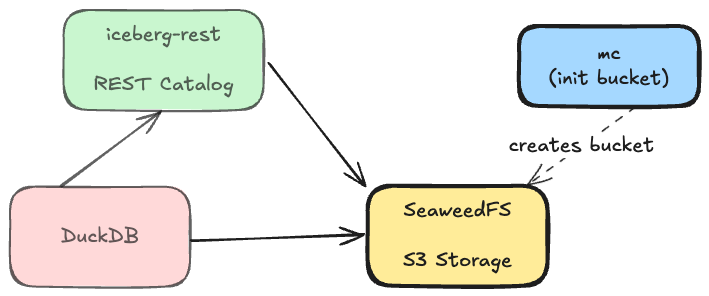
This diagram helps visualize the structure of SeaweedFS, one of the primary lightweight alternatives mentioned.
Complexity Trade-offs in Heavyweight Options
Some alternatives, while technically capable, may be unsuitable for simple demos due to their configuration complexity. Garage, for example, requires specific plumbing for initialization and unique key ID formats that can be a hindrance for quick local testing.
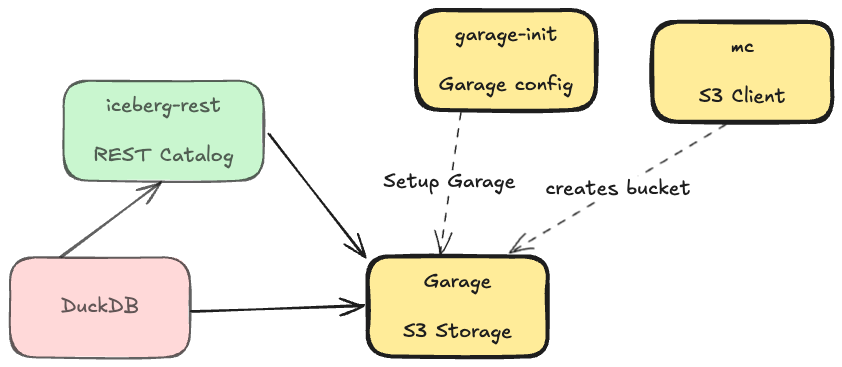
This diagram illustrates the architecture of Garage, which is noted for its configuration complexity.
Apache Ozone, while backed by the Apache Software Foundation, is described as a heavyweight system that is difficult to deploy without multiple nodes. Similarly, Ceph Object Gateway is often considered too complex to slot into a simple local Docker Compose stack for demonstration purposes.
Governance and Community Health
A critical consideration when choosing a replacement is the 'bus factor' and long-term governance. While many options are open-source, only Apache Ozone is currently owned by a foundation, meaning other projects could theoretically change their licensing or be abandoned by a single contributor.
Developers must weigh the ease of configuration against the risk of using 'abandon-ware' or projects with limited community backing. The goal is to find a balance between a project that is easy to deploy today and one that will remain maintainable in the future.