Karl Patterson Schmidt, a world-renowned curator of zoology at Chicago's Field Museum of Natural History, died on September 26, 1957, less than 24 hours after being bitten by a snake he was attempting to identify. Schmidt, a leading expert in herpetology—the study of reptiles and amphibians—was handling a 30-inch snake provided by the Lincoln Park Zoo when the bite occurred on his left thumb.

This portrait identifies the primary subject of the article, the curator who died from the snakebite.
The Identification and the Bite
The snake in question was brought to the Field Museum by the Lincoln Park Zoo as a mystery shipment from Africa. Schmidt identified it as a boomslang (Dispholidus typus) based on its head shape, dorsal scales, and color pattern, though he noted it lacked the divided anal plate typical of the species.
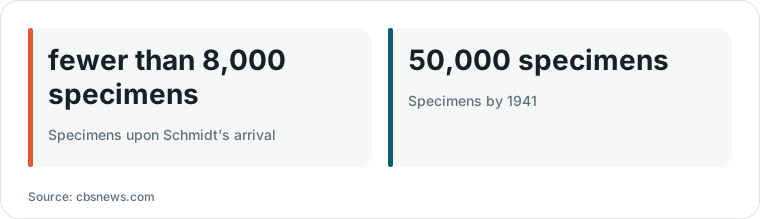
Chart drawn by HN Digest from figures reported by cbsnews.com; values are shown as written in the source.
Unlike many venomous snakes, boomslangs are colubrids. They do not possess a syringe-like ducting system to inject venom; instead, they have grooved teeth in the back of their mouths and must 'chew' their saliva, which contains toxins, into their prey. Because of this, experts in 1957 may not have perceived the snake as an immediate lethal threat.
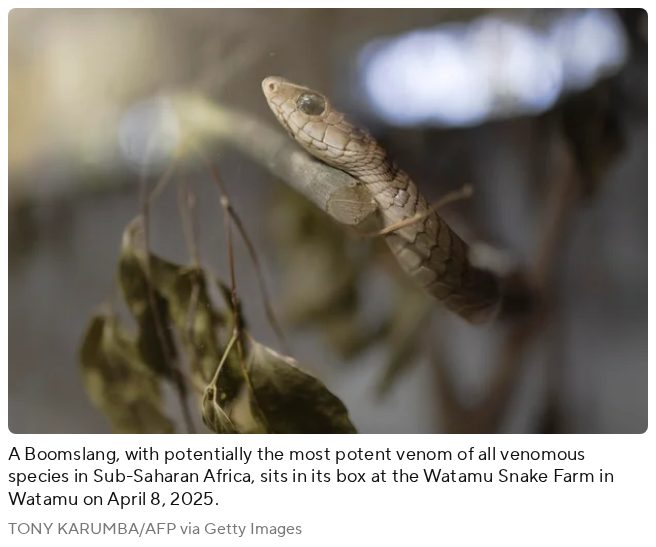
This image illustrates the specific species of snake, the boomslang, that caused the fatal bite.
“The punctures bled freely and I sucked them vigorously”
— The curious story of a renowned Field Museum scientist, a deadly snakebite, and a diary that documented it all
A Diary of Deterioration
After the bite, Schmidt returned home and began a graphic chronological record of his symptoms. His diary noted strong nausea and chills within an hour, followed by a fever of 101.7°F and bleeding from his gums and mucous membranes.
By the following morning, Schmidt recorded bloody urine and continued oral bleeding. Although he initially felt well enough to call the museum to report he would be at work the next day, he suffered a sudden collapse at noon, leading to respiratory paralysis and death shortly thereafter.
Medical Limitations and Legacy
An autopsy revealed extensive internal bleeding and massive hemorrhages in Schmidt's intestines, brain, and kidneys. While some snakebites can be treated with polyvalent antivenom, boomslang antivenom is monovalent, meaning it only works for that specific species.
In 1957, such a specialized treatment was not available in the United States. Schmidt's death serves as a historical reminder of the dangers of handling exotic wildlife and the logistical challenges of treating envenomation from non-native species, a risk that persists today when exotic snakes are kept as pets.
What Hacker News readers are saying
- Alternative: One commenter shared a personal experience of intentionally exposing their skin to a jellyfish carcass to observe the physical reactions and symptoms. comment ↗
- Skeptical: Another commenter argued that the scientist likely knew that antivenom for rare African snakes was virtually non-existent in 1957, making a hospital visit ineffective. comment ↗
Summarized opinions from the Hacker News thread, not verified facts. Read the full discussion ↗