Retinal degenerative diseases present a significant challenge for medical science because mammalian eyes lack the inherent ability to regenerate lost neurons. In contrast, cold-blooded vertebrates like zebrafish can repair retinal damage because their Müller glia (MG)—a type of glial cell—can be reprogrammed into retinal progenitor cells (MGPCs). These progenitor cells then proliferate and differentiate into new neurons. However, in mammals, Müller glia typically fail to undergo this transformation, instead entering a quiescent state after injury.
Researchers have identified a specific mechanism for this regenerative failure: the presence of the transcription factor Prox1. While Prox1 is essential for normal development, it acts as a barrier to regeneration in mammals. The study found that Prox1 accumulates in the Müller glia of injured mouse retinas, but notably, it is not endogenously expressed by the glia themselves. Instead, the protein is acquired from neighboring retinal neurons through a process called intercellular protein transfer. In zebrafish, where regeneration is successful, this accumulation of Prox1 in the Müller glia does not occur. By blocking this transfer or using an anti-Prox1 antibody to sequester the protein, the researchers were able to successfully induce Müller glia to reprogram into progenitor cells in mouse models.
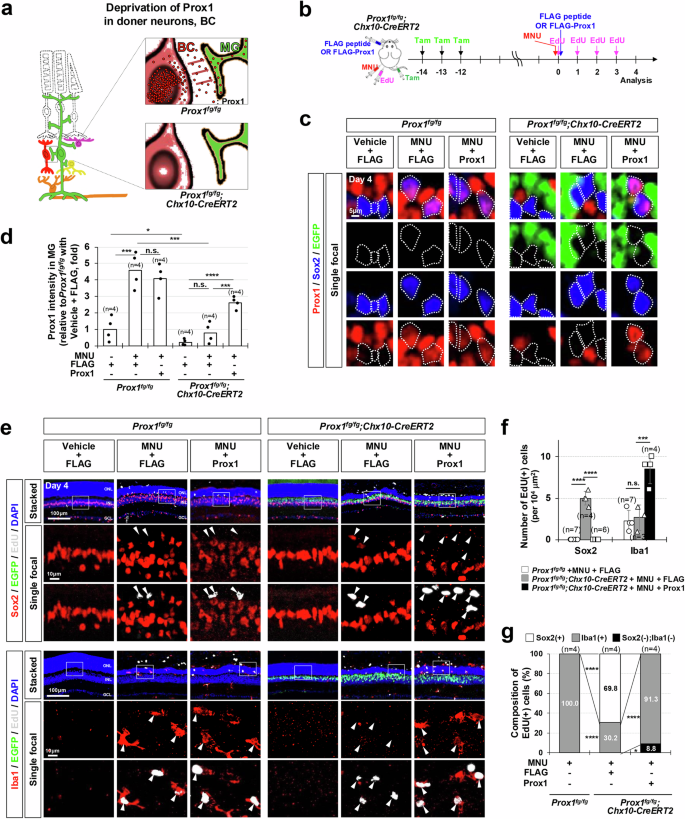
This figure illustrates the mechanism where removing Prox1 from donor neurons allows Müller glia to regain their regenerative potential.
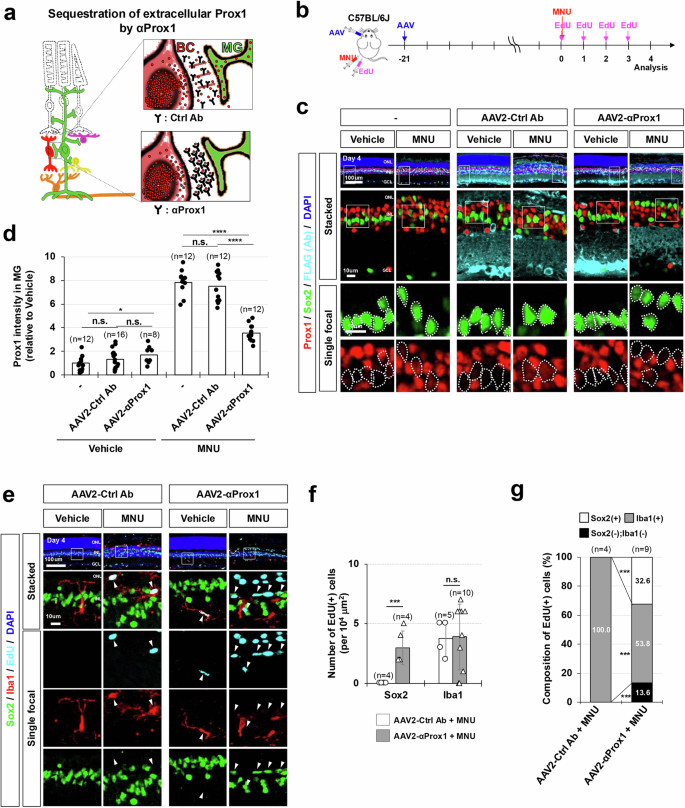
The figure depicts the use of antibodies to block the protein transfer that normally prevents retinal regeneration in mammals.
The implications of this finding suggest a potential therapeutic pathway for treating conditions like retinitis pigmentosa. In mouse models of the disease, the researchers used adeno-associated viral delivery to administer an anti-Prox1 antibody. This treatment promoted the regeneration of retinal neurons and successfully delayed vision loss. While the study establishes Prox1 as a significant barrier to regeneration, the transition from mouse models to human clinical applications remains a complex hurdle, as the researchers highlight that the success of such a therapy depends on the precise management of the retinal environment to allow for healthy integration of new neurons into existing circuitry.
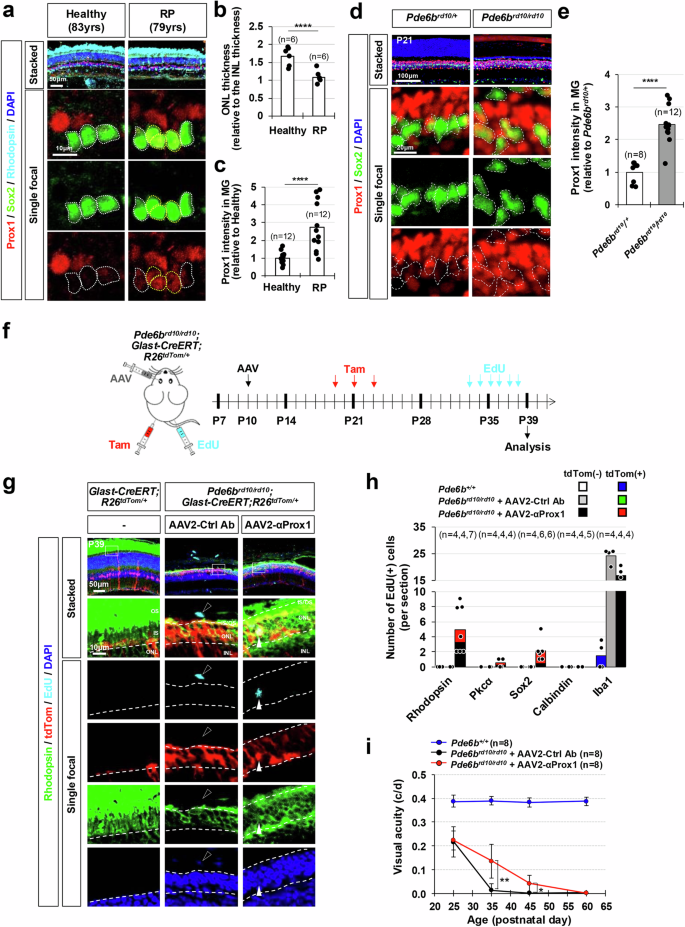
This visual supports the therapeutic application of the study's findings in treating degenerative retinal diseases.