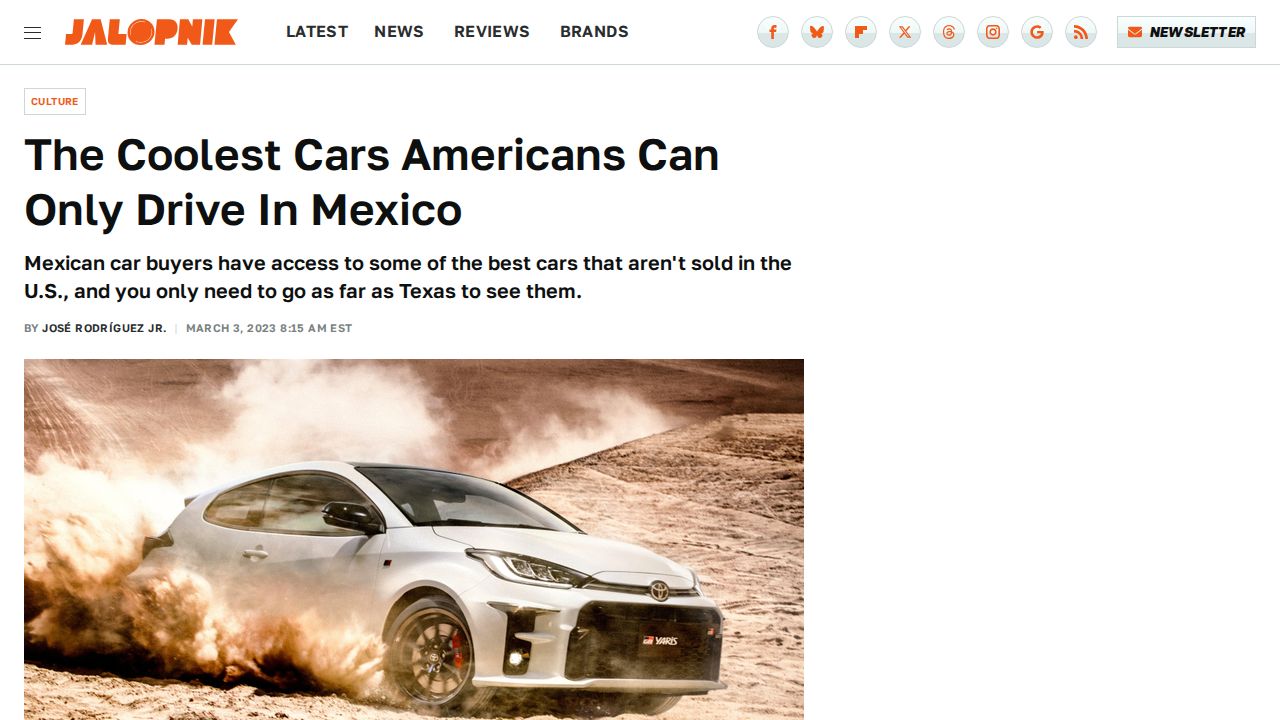
The U.S.-Mexico border functions as a gateway to a distinct automotive landscape. Because the Mexican market prioritizes different vehicle segments and regulatory standards, it hosts a variety of cars that have either been phased out of the United States or never entered it. This 'Mexico-market' includes a high concentration of subcompact cars, which have largely disappeared from American showrooms. Examples include the Suzuki Ignis, a tiny hatch suited for narrow avenues, and the Audi A1, a compact 'sportback' that remains available in Mexico while U.S. models have grown significantly in size.
A primary driver of this unique inventory is the rapid expansion of Chinese automotive manufacturing. Several vehicles currently popular in Mexico are rebadged Chinese imports produced by conglomerates like SAIC-GM-Wuling. For instance, the Chevrolet Captiva and the Chevrolet Cavalier in the Mexican market are both Chinese-manufactured models. Additionally, the Ford Territory is a Chinese-made SUV produced in partnership with Jiangling. These vehicles highlight a trend where Chinese brands are filling specific niches in the Mexican market that are not currently served by American or European manufacturers.
Beyond specific brands, the Mexican market favors high-utility vehicles that differ from U.S. styling trends. This includes 'coup-utes'—pickup truck-car hybrids like the Volkswagen Saveiro and the Ram 700—which combine small footprints with cargo beds. The market also features high-capacity multi-purpose vehicles (MPVs) like the Toyota HiAce, a stick-shift van capable of seating up to 12 adults, and the Mitsubishi Xpander, a tall, narrow compact car that seats seven. These vehicles prioritize passenger volume and practicality over the larger, more standardized designs common in the U.S. While these cars are accessible to those who cross the border, their presence in Mexico is often tied to the fact that they do not meet specific U.S. safety or emissions requirements, creating a distinct regional ecosystem for automotive variety. However, the long-term repairability and parts availability for the rapidly expanding Chinese brands in this region remain an open question as the market continues to evolve.
The availability of these vehicles is tied to Mexico's role as a gateway for cars that do not meet specific U.S. safety or emissions requirements. While the source material does not specify the exact regulations for each model, the distinction remains a primary reason for the geographical divide in car availability. Furthermore, while the rapid influx of Chinese brands offers more variety, there is no independent verification regarding the long-term reliability or software longevity of these specific models compared to established legacy brands.