OccupySaaS is a protest movement framed as a digital successor to Occupy Wall Street, driven by the grievance of engineers being laid off while the platforms they helped build continue to grow. The movement targets the 'per-seat' pricing model, which the organizers describe as a tax on growth that charges companies for every new hire or contractor. By creating open-source alternatives, the movement aims to break the 'lock-in' created by proprietary APIs and export walls that keep customers captive to specific vendors.
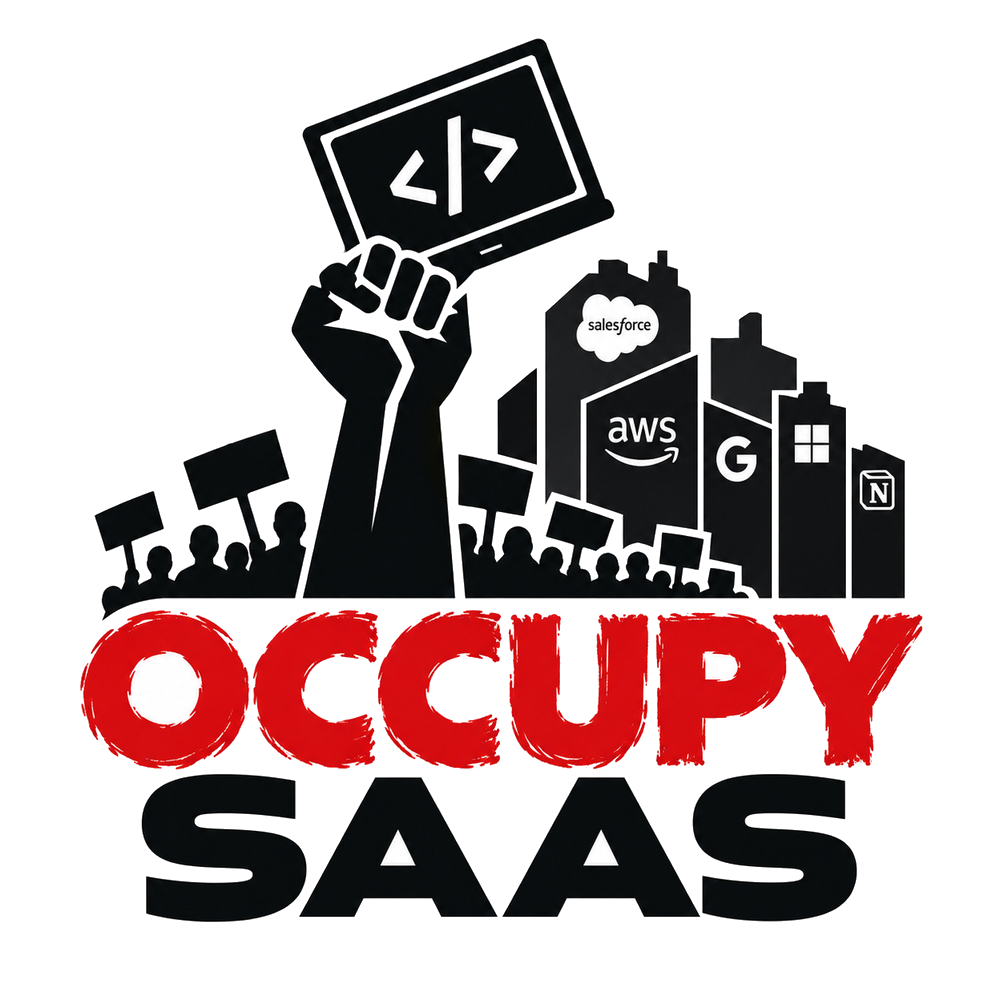
The logo visually represents the movement's identity as a digital successor to Occupy Wall Street.
To navigate the legal complexities of rebuilding existing platforms, OccupySaaS employs a 'clean-room' engineering methodology. This process ensures that no proprietary code is leaked or stolen from former employers. Instead, human 'spec writers' analyze public documentation, open standards (such as OAuth 2.0 and REST), and published SDK behaviors to create precise specifications. These specifications are then fed to AI agents, which perform the heavy lifting of generating code, contracts, and tests. A strict firewall separates the spec writers from the builders, and every merge undergoes human review to ensure the resulting software remains compliant with the clean-room policy.
The movement has already launched two primary projects: ZeroAuthy and SalesCompel. ZeroAuthy is a self-hostable identity server designed to be compatible with the Auth0 Authentication API, allowing users to point existing Auth0 SDKs at a ZeroAuthy tenant without code changes. SalesCompel is a Salesforce-compatible CRM built with a Go and PostgreSQL core. Both projects are written in Go to facilitate easy self-hosting as single, container-friendly binaries. While these tools are released under the Apache-2.0 license and offer a path toward independence, the organizers acknowledge that the projects are currently in early stages and are not yet fully production-ready, requiring users to balance the benefits of independence against a currently limited feature set.
Despite the technical goal of providing 'drop-in' replacements, the movement faces significant hurdles regarding long-term viability. While the software is free and open-source, the transition from a protest-driven project to a reliable enterprise solution requires a coherent long-term vision and support structure that can compete with the established guarantees of major vendors. Furthermore, the current projects lack public performance benchmarks or adoption data, leaving it uncertain how these clean-room builds will scale or perform under heavy production loads compared to the proprietary giants they aim to replace.