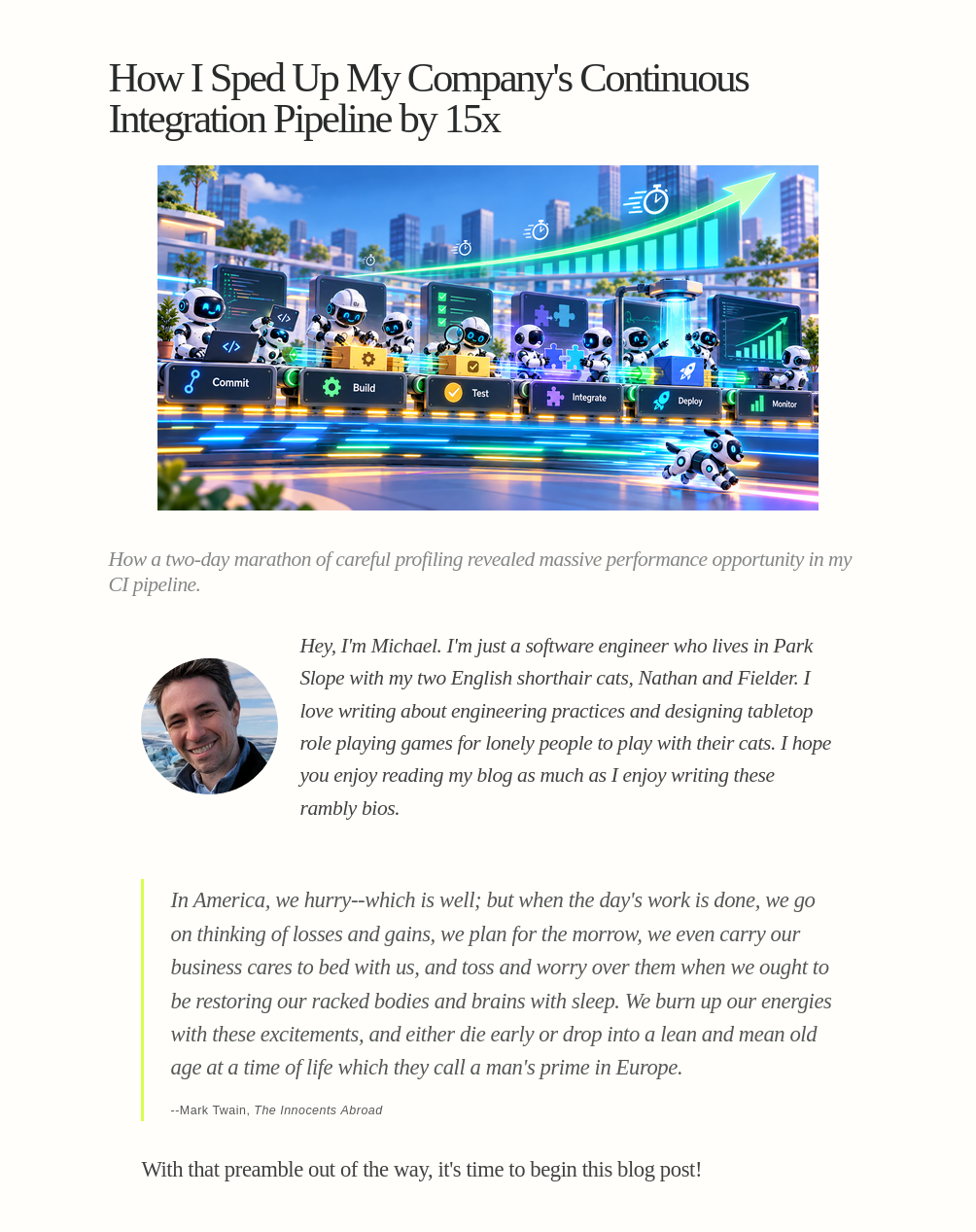
软件开发者常通过博客文章分享知识,但许多人会陷入可避免的陷阱降低写作效果。之所以最常见的错误,远超其他,是作者在引言中花费太多时间在背景故事上,而没有切入主题。正如《Refactoring English》的作者所指出的,读者常常会发现自己已经读了几段,却不知道作者想表达什么。开发者希望快速知道文章是否与自己相关以及阅读后能获得什么收益,因此标题和前三句话应该回答:'作者是为像我这样的人写这篇文章吗?'以及'我从阅读中能获得什么好处?'。
另一个重要的反模式是过度依赖链接来解释术语,而没有在行内提供简短解释。博主们常想提及读者可能不认识的术语,但不给出简短定义,而是在该术语上贴一个链接就认为问题解决了。然而,这迫使读者中断阅读流程,离开文章去理解一个单词,导致阅读体验变差。解决方案是总结跟随文章所需的关键信息,同时将外部链接视为额外材料而非前提条件,确保读者无需点击任何链接即可从头到尾享受和理解内容。
This image relates to the article's point about developers wanting to quickly assess an article's relevance and benefit, which should be evident in the title and first sentences.
This image illustrates the meandering introductions anti-pattern where authors spend excessive time on backstory before getting to the point, as discussed in the article.
过度正式也是一个常见问题,因为初学者软件博客作者错误地认为他们必须用僵化、过于正式的写作方式才能被认真对待。事实上,软件开发领域是最不讲究的白领工作之一,读者经常在穿着睡衣和人字拖、边吃谷物边敲键盘时阅读文章。他们不期待也不希望看到像法律文件那样的写作。相反,博主们应该像在现实生活中交谈那样写作,采用轻松、亲切、不事张扬的风格,就像午餐时向朋友讲述一个故事一样,这一点可以从著名的软件博客作者如 Joel Spolsky、Kathy Sierra、Terence Eden 和 Raymond Chen 的作品中得到体现。